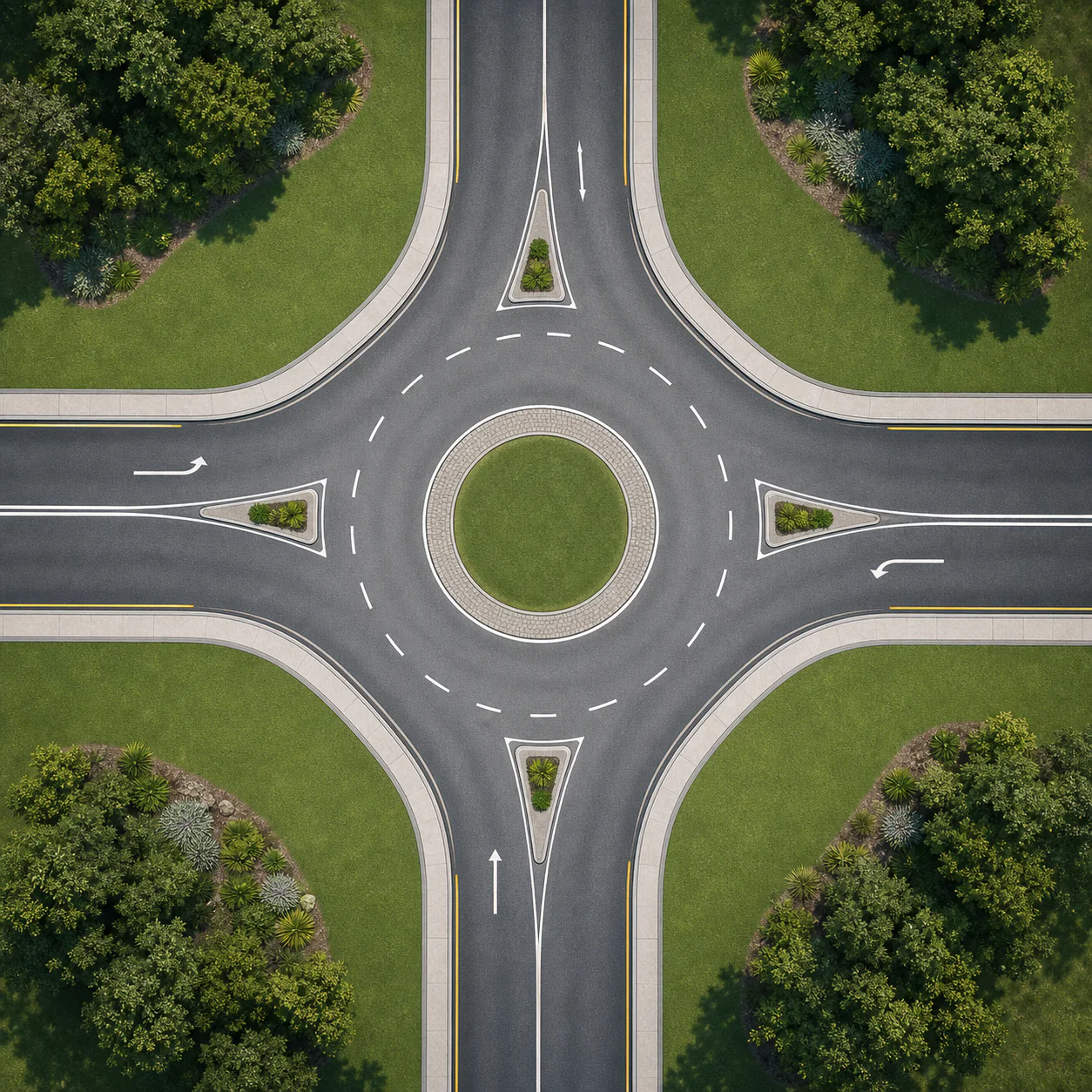
 Approaching a Roundabout
Approaching a Roundabout
Practice keeping left, moving clockwise, and signalling before you exit.
Start practiceInteractive practice
Choose what to do, watch the road scene respond, and learn why the move is safe.
New visual practice
Recognise the signs visitors most often need before a rural drive, bridge, railway crossing or roadworks area.
Approaching a RoundaboutPractice keeping left, moving clockwise, and signalling before you exit.
Start practicePractise the signal sequence for a straight-ahead movement at a New Zealand roundabout.
Start practiceRecognise the difference between a continuing road and a terminating road.
Start practiceZebra crossings require a deliberate slow-down and readiness to stop.
Start practiceWet surfaces need more time and distance for every reaction.
Start practiceDriveways are an easy place to overlook people already using the footpath or cycle path.
Start practiceThe diagonally marked centre strip is for waiting safely before or after a right turn.
Start practiceYellow no-passing lines mark places where sight distance is unsafe.
Start practiceWhere two lanes become one, drivers should make space and merge in turn rather than trying to get ahead.
Start practiceLoose gravel reduces grip and can make steering or braking sudden and unpredictable.
Start practiceAnimals can move unpredictably and may be followed by more animals.
Start practiceLarge vehicles and exposed sections can make wind gusts feel sudden and forceful.
Start practiceShaded sections can stay icy long after exposed road has thawed.
Start practiceYour speed must leave enough distance to stop within what you can see.
Start practiceNew Zealand road trips often take longer than visitors expect, especially on winding roads.
Start practice